Starting 2026 Off Strong! Mission, Improvements, & Externs

Our patient care model allows each dental patient to have a scheduled appointment for one-hour; some appointments finish before that hour, some take longer than an hour, it all depends on the complexity of the treatment plan. Having an initial hour block for an appointment allows our staff and volunteers to build relationships with patients: discuss social determinants of health-related needs (transportation, housing, child-care, and more), oral health concerns, overall health history, tobacco cessation, and really whatever other concerns they may have.

On a day with full staff and volunteer capacity, the Red Logan Dental Clinic is able to see between 10 and 12 patients.

We moved to the Gates Memorial Library in 2001, so our equipment was aging, despite regular maintenance. When equipment began unexpectedly breaking down in 2025, the dental clinic underwent a period of reduced capacity. From July through December, the clinic cared for fewer patients than anticipated due to system failures with the dental vacuum and compressor.

Thankfully, the Red Logan Dental Clinic is back up and running, having completed the necessary repairs and improvements to resume normal capacity.

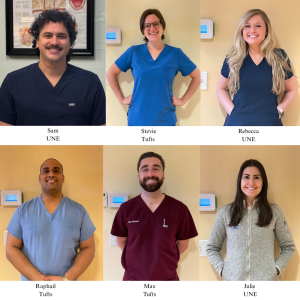
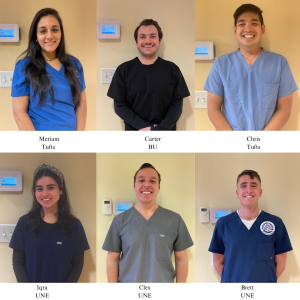
Tools are now standardized across each operatory, taking less time to train externs and other volunteer providers to use; equipment is modernized, and everything is easier to sanitize. With these improvements, the dental clinic is looking forward to resuming regular patient-care and anticipates no further disruptions! This remains especially important as we continue to welcome new dental externs to make even more of an impact, like Angelo!


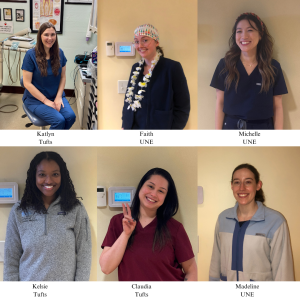
Angelo, a Vermont local completing his schooling with Tufts, joined the Red Logan Dental Clinic team from December 29th through January 27th. In February, the dental clinic will welcome Sara from the University of New England!


If you’re a dentist, dental assistant, or dental hygienist (with licensure in the state of Vermont) interested in joining our team to continue caring for our neighbors’ dental health needs, please reach out to us! More volunteers ensure more individuals in the Upper Valley have access to dental care.
 

Integrated Behavioral Health

Mental health touches almost every part of our lives. Stress, mood, habits, and emotional well-being often shape how we manage our own health. In fact, most primary care appointments with the medical clinic include some mental or behavioral health component. The need for mental health care remains a major concern in our community. In the 2025 Community Health Needs Assessment, mental health care was identified as a continuing and top priority for community health improvement in community discussion groups.

What is integrated behavioral health?

Integrated behavioral health brings medical care and mental health care together in one setting. Providers work as a team to support the whole patient, rather than treating physical and emotional health separately. This care may include support for long-term health conditions, emotional challenges, substance use, tobacco use, and other daily habits. It also considers how stress, nutrition, and movement affect overall well-being. The goal is to make mental health support easier to access and part of routine care, especially for our patients who are often left out of traditional access opportunities.


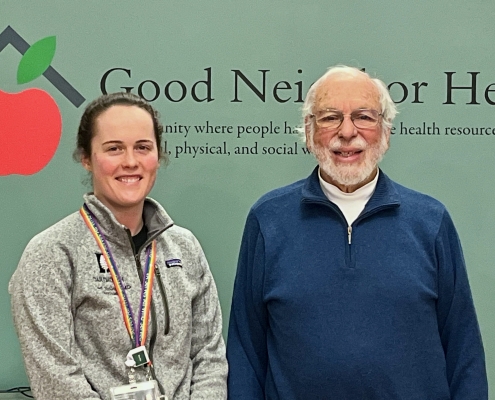
“Working together at Good Neighbor Health Clinic has allowed me to witness firsthand the vital role that community health centers play in providing care to individuals with limited or no insurance coverage. I have seen the life-changing impact of the care and compassion that our providers and staff bring to the clinic each day. As a psychiatrist, I am just one piece of a much larger puzzle in delivering comprehensive mental health services to our community. We are fortunate to offer counseling services through highly skilled and insightful psychotherapists who work collaboratively to support our patients. Our nursing staff serve as the frontline for patient care—fielding and triaging calls, coordinating care, and providing essential ancillary support. I regularly rely on their expertise and dedication to enhance the quality of care I provide to my patients.” -Dr. Eileen McGarry, MD


Studies show that integrated behavioral health can lead to meaningful improvements. Many patients experience reduced symptoms of depression, and both patients and providers report better care experiences. Some smaller studies also suggest lower emergency room use when mental health support is part of primary care, reflecting that better care coordination can lead to better health outcomes. This approach is even widely considered the standard for high-quality care. Inside the medical clinic, we have several volunteers who provide mental and behavioral healthcare. The team includes psychiatrists, psychiatry residents, licensed clinical social workers, and mental health counselors who all contribute their time and expertise week after week. They work alongside primary care providers and staff members to ensure that care for patients remains coordinated to meet their ongoing health needs and identify continued areas for improvement.


Last year alone, the medical clinic scheduled 574 appointments focused on behavioral health services.


By strengthening our approach to integrated behavioral health, our clinic continues to respond directly to these needs. With upcoming changes to insurance and increasing costs of living, we know that the demand for care will continue to grow. We look forward to welcoming even more volunteer providers to assist in care for our neighbors in need.

If you’re interested in making a difference -either through clinical volunteer efforts or a direct contribution, visit our Get Involved page.


Sources:

Staab, Erin M et al. “Integration of primary care and behavioral health services in midwestern community health centers: A mixed methods study.” Families, systems & health : the journal of collaborative family healthcare vol. 40,2 (2022): 182-209. doi:10.1037/fsh0000660

Schrager, Sarina B. “Integrating Behavioral Health Into Primary Care.” Family practice management vol. 28,3 (2021): 3-4.

Community Health Needs Assessment Fiscal Year 2025

September is Suicide Prevention Month

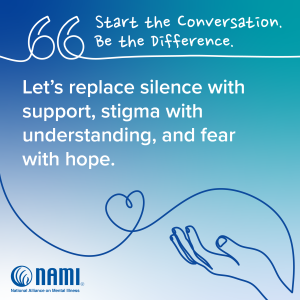
The National Alliance on Mental Illness (NAMI) is dedicated to building better lives for the millions of Americans affected by mental illness. NAMI is made up of more than 700 State Organizations and Affiliates who work to raise awareness, provide support and education to individuals in need. NAMI also helps operate the 988 crisis service! This is a confidential, judgement-free support that is available to anyone 24/7 via call or text. With this month being Suicide Prevention Month, challenge yourself to start a conversation and be the difference. Ask someone how they’re doing and be open to actually listening. Be ready to spread awareness about available crisis resources, especially if someone is in need. These little things can save lives.


Here are a few resources to keep in mind:

West Central Behavioral Health / New Hampshire Rapid Response Access Point – 833-710-6477

Headrest Crisis Suicide Hotline – 603-448-4400

Clara Martin Center Emergency Services – 800-369-6360

HCRS Crisis Services – 800-622-4235

Crisis Text Line – text 741741


Remember, help is always available!  


When health providers partner with community food resources, we build stronger networks of care.

We recently spoke with one patient who’s been involved in several of our food efforts. While everyone’s needs and experiences are different, his comments offered some insight into how these efforts have gone. 


Food access is deeply linked to health. When food resources become part of the care experience, barriers that often stand between our patients and their ability to eat well can be removed.  Accessing food resources after appointments means fewer trips for individuals who may not have reliable transportation, less stress, and sometimes, the chance to try foods our patients have never tried before.

Smiling, one patient shared, “The eggplant, yeah that one didn’t really work out the first time. But I’m going to try it again. I’ve never tried it before!”. Overall, he’s felt that the food options, including the cooking class, has lifted a tremendous amount of weight from his shoulders. For this patient in particular, these connections have also led to ongoing food assistance within the community.

Through conversations with staff, our patients are able to learn about what else is available in the community to help support their food needs. This patient added, “I learned about the Haven and have started going there when I need it. I’ve brought my neighbor with me too and let people know in my neighborhood who may need a little extra help where to go”.

Since 2024, we’ve been working to address the food needs as part of supporting their overall health. Thanks to funding from Hannaford, we established a small patient food pantry stocked with shelf-stable items, including low-chew, limited preparation options to accommodate different dietary needs. Dr. Emily Cohen, one of our medical clinic volunteers, introduced a patient cooking class hosted at Open Door. This opportunity gave patients a chance to learn about preparing simple, nutritious meals, but also gave an opportunity to connect with the food, staff, and one another. To expand the nutrition options we offered, we also partnered with Vermont Youth Conservation Corps (VYCC) to bring local, seasonal produce to the clinic.

Through these efforts, we saw positive results. Our patients shared that they were eating more vegetables than before, and several reported a decrease in food insecurity. But most importantly, an overwhelming amount of individuals told us they wanted to participate in programs like these again. This year, to bring nutritious options to the clinic year-round, we also partnered with Willing Hands.

When talking about cooking at home, he admitted, “I’m not that creative. It’s why I liked going to the cooking class because there were new ideas I wouldn’t have come up with on my own.” The recipes and conversations gave a better sense of what to make and how to make it. With suggestions like linking nutritious recipes to our website, we know that there is still work to be done to assist our patients.

To stay up to date on the work we’re doing, make sure that you are signed up to receive our newsletter and follow us on social media! Are you in need of food resources? Visit our Community Resources page to learn about options near you!